Dragons: Rise of Berk
- 4.5
- Rating
- 50.00M
- Installs
- Free
- Price

 Analysis by App-foxy
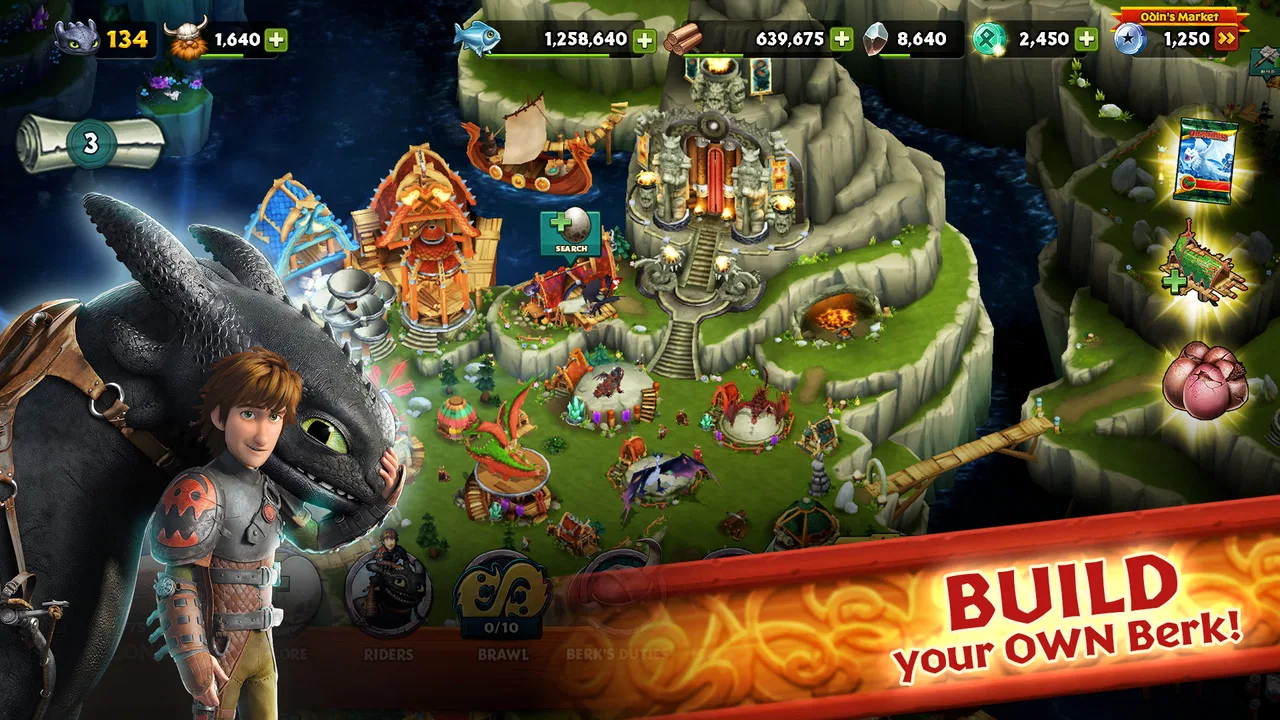
I went into Dragons: Rise of Berk expecting a light village-building game with familiar characters, but its appeal is more specific than that. The central pleasure comes from turning a quiet island into a busy dragon home, then checking back to see what has changed. I send dragons on tasks, collect what they bring back, improve parts of Berk, and use those improvements to unlock the next small objective. It is not a fast action game, and it does not try to be one. Its strength is the steady rhythm between doing something now and having a reason to return later.
That makes it a comfortable fit for short mobile sessions. I can open it while waiting for a bus, make a few decisions, leave a task running, and come back when there is something new to collect. The game is free, rated for Everyone, and developed by Ludia Inc. It belongs to the simulation category, although the presence of dragons and island exploration gives it more personality than a plain construction simulator.
How the first action sets the whole game in motion
The first meaningful decision is not simply placing a building. It is deciding what deserves attention first: a dragon that needs care, a resource-producing activity, an island improvement, or a new piece of progress. That choice matters because Berk is built around connected priorities. A task may provide something useful, but the useful item usually has a destination. It might help expand the settlement, support a dragon, or move the player toward another unlock.
You May Also Like

 Blood Strike: 2.5 Anniversary
Blood Strike’s Loadouts Turn Every Drop Into a Tactical Gamble
A close look at Blood Strike’s custom loadouts: how fast access to signature weapons reshapes its battle royale rhythm, rewards preparation, and narrows the gap between fights.

 Pandora - Music & Podcasts
Pandora’s Music Is Easy to Start, but Harder to Recover
Pandora’s strength is its low-effort path from a seed to a station. Its weak spot is how much confidence it asks you to place in connection, setup, and quiet recovery.

 8 Ball Pool
 Is Built on Rivalries, Rematches, and Routine
A close look at the rivalries, rematches, shared routines, and unanswered safety questions that turn a quick pool match into a persistent mobile community.

 Samsung Music
’s Quiet Strength Is Playing What You Already Own
Its reach comes less from spectacle than from dependable access to a personal library. That simplicity is both the app’s strongest retention engine and its ceiling.

 AccuWeather: Weather Radar
AccuWeather Review: A Quick, Clear Forecast for Everyday Decisions
For everyday plans, the best forecast is the one you can understand quickly. AccuWeather makes rain timing, radar, and local conditions easy to act on, with a few trade-offs.

 Hill Climb Racing
Why Hill Climb Racing Still Turns Crashes Into One More Run
A tiny car, a bumpy hill and one more upgrade: Hill Climb Racing keeps resurfacing because its simple chaos makes every near-miss feel personal.
More From Our News Desk
View All News


I like this because the game rarely feels like an empty screen waiting for decoration. Even a small action tends to point toward another action. The island becomes more active as I develop it, and the visual change gives the effort a clear payoff. The dragons are not just ornaments placed around a village; they are the reason the village feels worth maintaining.
The opening hours are especially approachable for younger players and anyone unfamiliar with this type of game. The objectives are easy to understand, and the presentation makes progress visible rather than hiding it inside complicated menus. At the same time, experienced simulation players may find the early guidance quite gentle. If you prefer immediate strategic pressure, tactical combat, or a large amount of freedom from the beginning, this will feel slower than a traditional strategy game.
The best way to approach the first session is to avoid spending every available resource as soon as it appears. I found it more useful to look at the next likely improvement and keep enough flexibility for it. That habit reduces the feeling of being stuck later. The game encourages constant activity, but constant activity is not the same as efficient activity.
Another useful early habit is to treat the island as a schedule rather than a static layout. When I know I will only have a minute, I choose actions that can be started and collected quickly. When I have more time, I inspect the wider set of tasks and decide which one supports the next upgrade. This simple distinction makes the game feel less like tapping through notifications and more like managing a small living settlement.
The dragon collection also changes how the first action feels. Finding or developing another dragon is more satisfying when it serves a purpose in the settlement, rather than being treated as a separate checklist. The game makes that connection clear: the creatures give the island its identity, while the island gives the creatures a reason to be there.
The feedback rhythm is the real hook
The most important design feature is the feedback rhythm. I start an activity, see the immediate response, wait for the result, and return to claim the reward. That rhythm is simple, but it is carefully arranged so that the game almost always leaves me with a new question. What should I collect first? Which improvement will make the next task easier? Should I spend resources now or save them for a larger goal?
This is where the simulation structure works well. The feedback is not limited to a number going up. A completed action can change the appearance of Berk, add another dragon to the settlement, or open a new direction for development. Those visible changes are important because they make waiting feel connected to a place I am building, rather than to an abstract timer.
There is also a pleasant difference between active and passive play. Active play involves choosing tasks, arranging priorities, and collecting results. Passive play happens when I close the app and let progress continue in the background of my day. The game is designed around both modes. If I want a longer session, I can make several decisions in sequence. If I am busy, I can leave with a clear reason to return.
That flexibility is useful in an everyday scenario. Imagine opening the game during a short lunch break. I can collect completed work, assign the dragons to the next useful activity, spend a few resources on an improvement, and close the app without needing to finish a demanding level. Later, the island has changed enough to make the next visit worthwhile. This is a better fit for casual routines than games that punish the player for leaving after only a few minutes.
However, the same rhythm can become predictable. The action-feedback pattern is satisfying when I am working toward a meaningful improvement, but less exciting when the next step feels like another round of collecting and waiting. I sometimes felt that the game was asking me to maintain momentum rather than make a difficult decision. Players who need constant novelty may lose interest once the basic routine becomes familiar.
The interface also invites frequent checking. That is not automatically a problem, but it is worth noticing. The game is good at creating unfinished business: a dragon is ready, a building can be improved, or another task is close to completion. I recommend setting a personal stopping point instead of responding to every available prompt. The experience is more enjoyable when I decide when to return, rather than letting the game dictate every spare moment.
Why the rewards feel personal instead of purely numerical
The reward system works best when it produces a visible change in Berk. A new dragon or a more developed part of the island gives the collection process emotional weight. I am not only gathering currency to fill a meter; I am making the settlement look and feel more complete. That is a strong advantage over many simulation games where rewards disappear into menus and upgrades are difficult to notice.
The dragons themselves provide a reason to keep going. Their variety gives the player a collection goal, while their place in the settlement prevents the collection from feeling entirely detached from the world. I enjoyed the sense that the island was becoming more populated and more recognizable as my progress continued.
Still, rewards are not always equally satisfying. A small payout can feel useful early on but less meaningful once the player is focused on larger improvements. This creates an important trade-off: quick rewards help maintain the session, while saving for a bigger goal can produce a stronger sense of achievement. I usually preferred saving when I had a clear upgrade in sight, but spending immediately can be reasonable when a small change unlocks a more productive sequence of actions.
The presence of in-app purchases adds another layer to that decision-making. The game is free to download and play, while optional purchases range from $0.99 to $199.99 per item. I would not recommend buying simply to remove every period of waiting. The core loop is built around returning later, so paying to rush everything can weaken the very pacing that makes the game relaxing. A purchase may make sense only for someone who already knows they enjoy the game and wants to support a particular collection or progression goal.
This is also where parents may want to be attentive. The Everyone age rating makes the game broadly accessible, but the availability of purchases means the device’s purchase controls still matter. I would set those controls before handing the game to a child. That is a practical step, not a criticism of the dragon theme; it simply keeps the free-to-play structure from becoming an unexpected part of the experience.
One of my more effective approaches was to connect rewards to a planned session length. For a quick visit, I focused on collecting and starting the next short activity. For a longer visit, I compared several possible upgrades before spending anything. That small change prevented me from wasting resources on an improvement that looked attractive but did not support my immediate objective.
What happens when a session resets
Every visit eventually reaches a natural reset. The current tasks are assigned, the available rewards are collected, and there is nothing urgent left to do. At that point, the game asks me to leave and come back later. This reset is not a failure state. It is the intended pause in the loop, and it gives the island time to generate the next set of decisions.
I think this is the clearest difference between Dragons: Rise of Berk and a conventional level-based game. In a level-based adventure, I usually want to finish a challenge before stopping. Here, stopping after setting up the next stage is often the correct move. The session ends because the preparation is complete, not because the story has reached a dramatic conclusion.
That design makes it easy to fit into a routine, but it also means the game is not ideal for players who want a complete experience in one sitting. If you dislike waiting for progress or checking back later, the reset will feel like an interruption. A traditional puzzle game, offline builder, or story-driven adventure would be a better choice for uninterrupted play.
The reset also gives me a chance to reconsider priorities. When I return, I can look at the island with fresh eyes instead of tapping through the same sequence automatically. I may notice that a resource should have been saved, that a different dragon task would have supported the next improvement, or that I have been collecting for its own sake. That pause is valuable because it turns the game’s slow pace into a planning opportunity.
There is a practical way to avoid unproductive resets: before closing the app, make sure every useful activity is assigned and that no easy collection is left waiting. I also like to check what the next upgrade requires, so the next session begins with a purpose. This is a small workflow, but it makes the return feel intentional rather than random.
Who will enjoy Berk, and who should skip it
This game is a strong choice for fans of animated dragon worlds who enjoy collection, gradual development, and short sessions. It is especially suitable for players who want a friendly simulation with a clear visual sense of progress. The broad age rating and straightforward objectives make it approachable, while the growing settlement gives returning players something to manage.
I would also recommend it to people who enjoy games that can sit alongside daily life. It works well when I have several brief moments rather than one long block of free time. The game gives each visit a manageable task, and I do not need to remember a complicated control scheme after putting it down.
I would skip it if your priority is deep strategy, immediate action, or a fully self-contained offline-style experience. The main challenge is deciding how to use time and resources, not mastering combat or solving difficult puzzles. Likewise, players who dislike free-to-play pacing may become frustrated by the repeated cycle of waiting, returning, and choosing whether to spend or save.
Compared with a standard city-building simulation, this one has a warmer identity because the dragons are central to the settlement rather than being decorative extras. Compared with a character-collection game, it gives the collection a physical home that changes over time. Compared with an action game based on the DreamWorks world, it is much calmer and more management-focused. Those comparisons explain both its appeal and its limits: it offers continuity and atmosphere, but not the intensity of a mission-based adventure.
The game has a 4.5 average from around 1.6 million ratings, with over 50 million installs. Those figures suggest a large and sustained audience, but they do not change the basic question of fit. The right player is someone who enjoys the loop itself: act, receive feedback, collect a reward, prepare the next task, and return when the island has something new to offer.
Technical details and the long-term decision
On Android, the listed minimum operating system is version 7.0, and the current version is 1.105.4. The game was released on June 18, 2014, so it has had plenty of time to establish its particular style of mobile simulation. That long-running structure is noticeable in the amount of content and the emphasis on continued development rather than a short beginning-to-end campaign.
The practical question is whether the long-term loop remains enjoyable after the novelty of the first dragons and island improvements fades. For me, the answer depends on how deliberately I play. If I rush through every available action, the game can feel repetitive. If I treat each session as a small planning exercise and keep a personal goal in view, the routine stays more engaging.
I also think the game is better when played with modest expectations. It is not trying to replace a console adventure, and it does not offer the same kind of immediate payoff as an arcade game. Its satisfaction comes from accumulation: a settlement that looks fuller, a collection that feels more complete, and a return visit that begins with several useful choices.
The main friction is the tension between patience and convenience. Waiting supports the game’s relaxed rhythm, but it can also make progress feel slow. Optional purchases offer a shortcut, yet using too many shortcuts can reduce the sense of earning the island’s development. My advice is to play without spending at first, learn how the tasks and rewards fit together, and only consider a purchase if the game remains enjoyable after the initial excitement has settled.
There is also a difference between collecting dragons and managing them well. A player who only chases the next creature may miss the value of improving the settlement around the collection. I found the experience more rewarding when I asked what each new addition changed about Berk, rather than treating it as another item to acquire and forget.
My verdict on the complete loop
Dragons: Rise of Berk succeeds because its loop is easy to understand but not completely empty. I take an action, receive clear feedback, earn something that supports the settlement, and reach a natural stopping point. The reset then creates a reason to return. That structure is simple enough for casual play, yet personal enough to make the island feel like mine.
Its best moments come from visible progress and the connection between dragons and their home. Its weaker moments come from repetition, waiting, and the temptation to pay for speed. Those limitations are important, but they are manageable if I approach the game as a patient simulation rather than a constant-action adventure.
After playing it, I would recommend it to a friend who likes animated worlds, collection goals, and games that fit around a busy day. I would explain that the fun is not in finishing a level; it is in arranging the next small step and seeing Berk become more alive over time. If you enjoy returning to a growing world more than chasing nonstop action, this is a thoughtful and approachable choice.
It is free, accessible to a wide audience, and substantial enough to support regular visits, but it is not the right match for everyone. Players who want deep tactical decisions, instant progress, or no purchase pressure should choose another type of game. For everyone else, the combination of dragons, settlement building, and repeatable short sessions gives the experience a clear identity—and a convincing reason to open it again tomorrow.
FAQs for Dragons: Rise of Berk
01What is Dragons: Rise of Berk about?
Dragons: Rise of Berk is a strategy-based mobile game where you build and manage your own Viking village in the world of DreamWorks' How to Train Your Dragon. Players raise and train dragons, embark on exploration quests, and defend Berk from mysterious threats. It's a mix of resource management and adventure, offering a rich storyline and engaging gameplay.
02Is Dragons: Rise of Berk free to play?
Yes, Dragons: Rise of Berk is free to download and play. However, it contains in-app purchases that allow players to buy resources, speed up processes, and gain other advantages. These purchases are optional, but they can enhance the gaming experience by providing faster progression and exclusive content.
03What platforms is Dragons: Rise of Berk available on?
Dragons: Rise of Berk is available on both Android and iOS platforms. You can download it from the Google Play Store for Android devices or the Apple App Store for iOS devices. Ensure your device meets the minimum system requirements for optimal performance and gameplay experience.
04Are there social features in Dragons: Rise of Berk?
Yes, Dragons: Rise of Berk includes social features that allow players to connect with friends. You can join alliances, compete in events, and share achievements. There are also leaderboards to showcase your progress and achievements compared to other players worldwide, adding a competitive edge to the game.
05How does the dragon training system work in Dragons: Rise of Berk?
In Dragons: Rise of Berk, players can collect and train over 400 unique dragons, each with distinct abilities and traits. Training involves feeding dragons to increase their level and enhance their skills. As you progress, you unlock new dragons and upgrade their abilities, making them more effective in defending Berk and completing missions.
Pros
- Stunning graphics and animations.
- Expansive world with multiple islands.
- Engaging storyline with beloved characters.
- Regular updates with new content.
- Strategic gameplay with resource management.
Cons
- Requires constant internet connection.
- In-app purchases can be pricey.
- Progress slows without spending.
- Occasional bugs and glitches.
- Limited energy restricts playtime.

Dragons: Rise of Berk
Gallery